
Every profiled metal roof sheet leaves open gaps where the ribs meet the purlin at the eaves, and again under the ridge cap. Left open, these gaps let in wind-driven rain, dust, insects and birds. A foam closure (also called an eave filler or ridge closure) is a strip of foam cut to the exact shape of your sheet, so it fills those gaps completely.
The catch: a closure only works if it matches your sheet profile. A closure that is a few millimetres off leaves small gaps along the whole roof. Here is how to get it right.
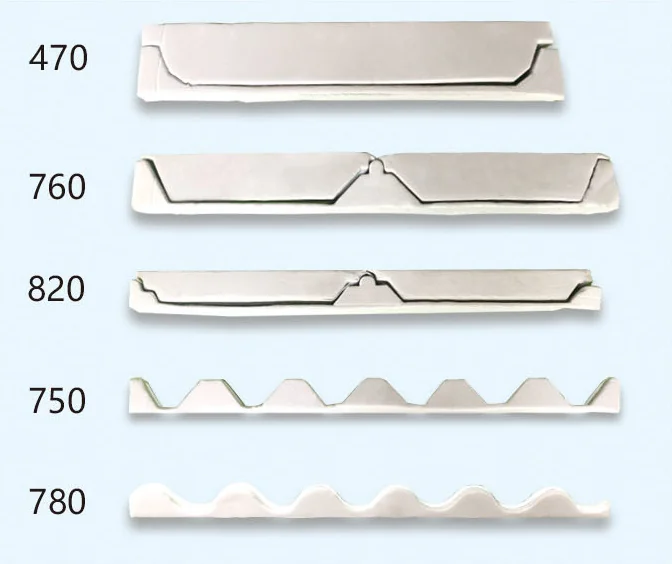
1. Eave closures and ridge closures are not the same
- Eave closure (bottom closure): sits under the sheet, on top of the purlin at the lower edge of the roof. Its top edge follows the underside of the sheet.
- Ridge closure (top closure): sits on top of the sheet, under the ridge cap or flashing. Its bottom edge follows the top side of the sheet.
Many profiles need both. When you order, say which one you need, or order both as a set.
2. Match the closure to your sheet, not to a name
Profile names change from supplier to supplier. One company's "760" can be slightly different from another's. Always match by the actual shape of your sheet. Four measurements matter:
- Cover width: the effective width of one sheet once installed (for example 760 mm or 820 mm).
- Rib pitch: the distance from the centre of one rib to the centre of the next.
- Rib height: how high each rib stands above the flat pan.
- Rib shape: trapezoidal, corrugated (wave) or stepped, and whether there are small stiffening ribs in the pan.
If you cannot measure accurately, a clear photo of the sheet end with a tape measure across it is usually enough for a supplier to match the closure.
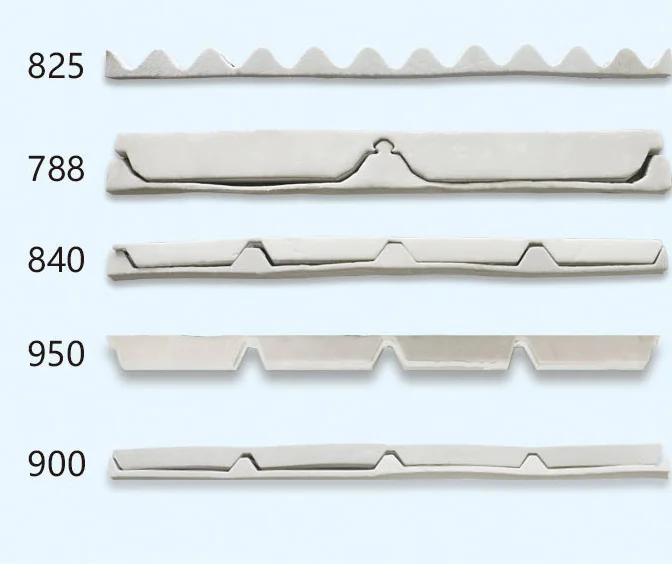
3. Common profiles and their closures
- Chinese trapezoidal profiles such as 760, 820 and 840 are named after their cover width in millimetres. Each needs its own closure shape.
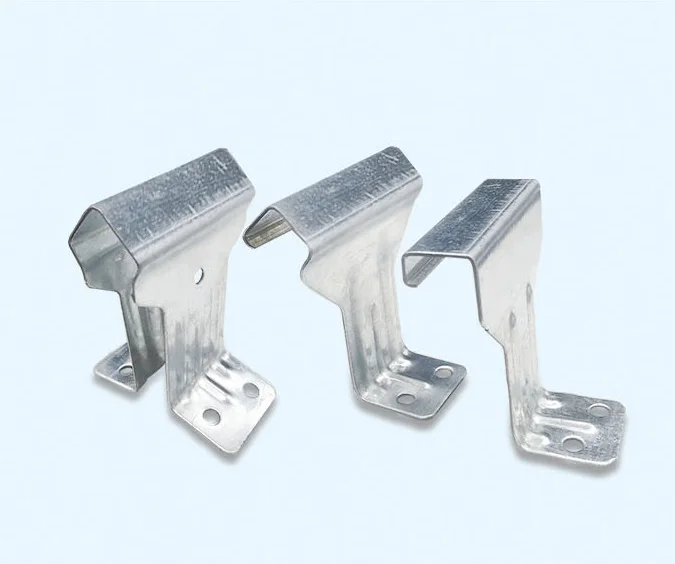
- Clip-lock and standing-seam (concealed-fix) roofs have tall, widely spaced ribs. Their closures are deeper and are often used together with roof clips.
- Corrugated (wave) sheets need a wave-shaped closure that follows the curve exactly.
- Local brand profiles (for example Spandek or Trimdek types common in Southeast Asia) can be matched to a closure from a section drawing or photo.
If your profile is not on a supplier's list, ask for a closure made to your own sheet. It usually only needs a photo or drawing to start.
4. What the closure is made of
Most roof closures are made from closed-cell polyethylene (PE) foam. Closed-cell foam does not soak up water. It stays flexible in heat and cold, and it compresses slightly to seal tightly against the sheet. For hot, sunny climates, ask for a UV-stable grade.
5. How closures are installed
- At the eaves: place the closure on the purlin, line it up with the sheet ribs, then lay the sheet on top and fix it through as normal.
- At the ridge: place the closure on top of the sheet, then fit the ridge cap over it.
- On low-pitch roofs or in heavy-rain areas, many installers add a bead of sealant or tape along the closure for extra protection.
6. Mistakes to avoid
- Ordering by profile name only: two "760" sheets from different mills may not share the same closure.
- Mixing up eave and ridge closures: they are mirror shapes and will not fit the other way round.
- Stretching or cutting closures to fit: if it does not match, the profile is wrong, so get the right one.
- Skipping closures on "small" jobs: the gaps are the same size on a small roof as on a big one.
7. Selling sheets? Sell the closures too
For roll-formers and roofing stores, closures and clips are an easy add-on. Customers who buy sheets from you need them anyway. Stocking the matching closures for the profiles you roll keeps that sale in your store instead of sending the customer elsewhere.
Get the right closure for your profile
VANRELY supplies foam closures and roof clips for common profiles including 470, 760, 820 and 840, and can make closures to your own sheet shape from a photo or section drawing. Factory-direct, no middlemen.
Send us a photo of your sheet end and we will tell you which closure fits. WhatsApp: +86 173 2988 2029 · Email: sales@vanrely.com
Frequently asked questions
How do I match a foam closure to my roof sheet?
Compare the sheet’s cover width, rib pitch, rib height and rib shape with the closure profile. Send an end-on photo with a ruler or a section drawing, because a profile name such as 760 or 820 alone does not confirm the fit.
Are eave closures and ridge closures interchangeable?
An eave closure fits below the sheet, while a ridge closure fits above the sheet under the ridge cap or flashing. They follow different sides of the profile, so specify the installation position before ordering.
Can VANRELY supply a closure for a custom roof profile?
VANRELY can make foam closures to a customer’s sheet profile from a photo or section drawing. Provide the profile dimensions and tell us whether the closure is for the eaves or ridge so the proposed shape can be checked before supply.