
A foam strip can sit flush at one rib and leave a gap at the next, even when the order and the roof sheets both say 760. When buying 760 roofing sheet accessories, check the sheet section, fixing method and installation position before ordering clips or closures.
A recurring gap is a reason to check the profile before the ridge cap goes on. A clip head that misses the rib return can also leave a concealed-fix sheet partly engaged. A sample assembly lets you catch both problems before the roof is laid.
Why a matching model number can still leave gaps
A profile number such as 760, 820 or 840 can indicate nominal effective cover. Verify the effective cover for the sheet specified, which is the width one panel adds after the side lap engages. Use that width to calculate sheet quantities and the full cross-section to match the accessories.
Read the section across the full sheet. Compare rib height, rib pitch, pan width and the folds or returns at both side laps. Sheets with the same cover can differ at any of these points. A clip head has to engage the rib return, and a closure has to follow the contour across the panel.
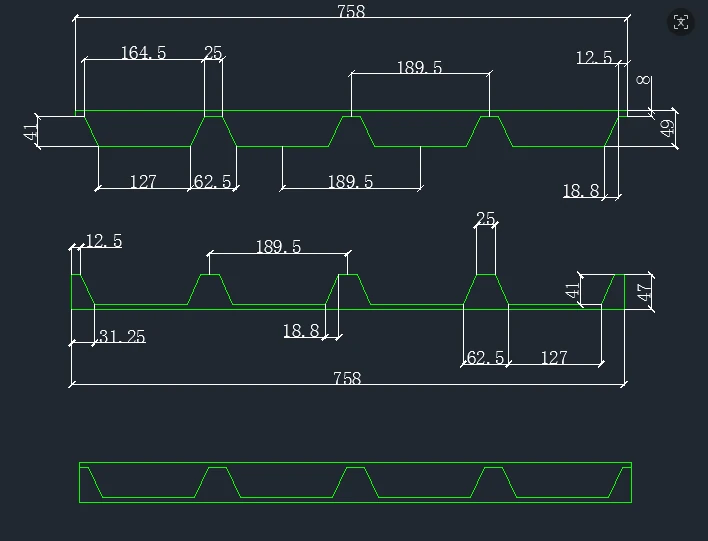
For a replacement, use an uninstalled spare or a square-cut sample clear of formed ends and locked laps. For new work, use the drawing for the sheets being supplied. Repeat the fit check if the profile or sheet supplier changes.
760 roofing sheet accessories and what to check for 820 and 840
Start with the fixing detail. On a concealed-fix roof, clips or brackets engage the sheet ribs and secure them to the supporting purlins without fasteners through the weather surface. On an exposed-fix roof, fasteners pass through the sheet at the positions specified for that system. Foam closures are non-structural seals for openings at the sheet profile. Check the clip engagement independently of the closure fit.
| Sheet designation | Clip or bracket references | Profiled foam closure references |
|---|---|---|
| 760 | Concealed-fix clips in 1.2 mm galvanized steel or stainless steel 304. Confirm the head shape against the rib return. | Reference strip 760 mm long, with 25 mm strip thickness. Confirm the contour and position. |
| 820 | Concealed-fix clips in 1.2 mm galvanized steel or stainless steel 304. Check the head shape and any centre or edge detail. | Reference strip 820 mm long, with 25 mm strip thickness. Confirm the contour and position. |
| 840 | The 840 bracket range includes two head shapes in 1.0 or 1.2 mm thickness. Confirm the correct bracket against the actual sheet and fixing detail. | An 840 profiled closure is available. Confirm the section and whether it goes at the ridge or eave. |
These dimensions apply to the VANRELY parts listed here. The 25 mm figure is the foam strip thickness. Check the sheet rib height separately on the section drawing. Confirm clip spacing, fastener specifications and roof-zone requirements against the project drawings.
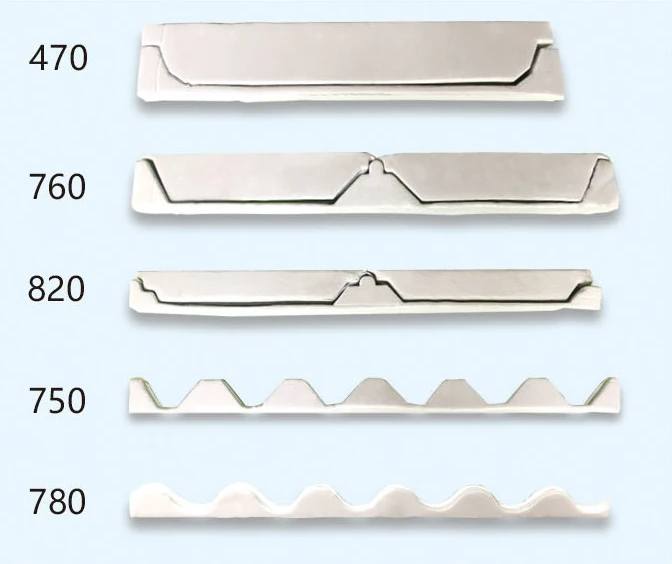
Match the closure to the ridge or eave
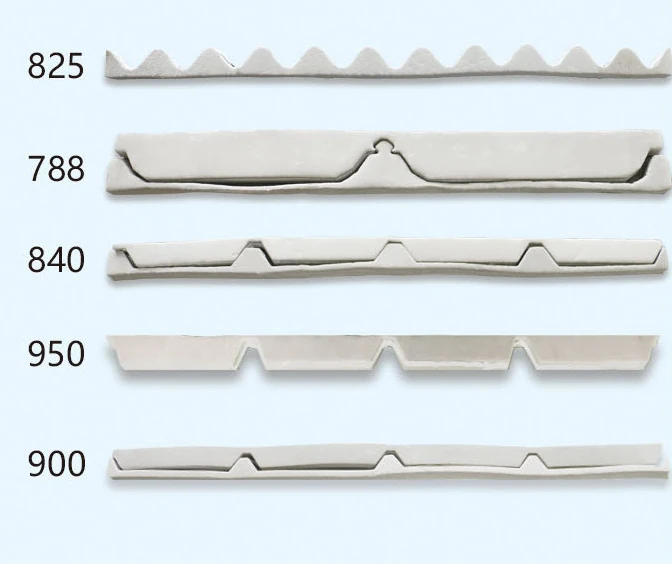
A ridge cap bridges the ribs and can leave openings below it. Where the detail calls for an over-sheet closure, its projections fill the pans beneath the cap. An under-sheet eave closure has projections that fit inside the ribs from below. On a sheet with narrow ribs and wide pans, these two faces need different contours. Order the upper and lower strips as separate items.
Check the ventilation and condensation details before sealing a ridge or eave. Keep any designed air openings and routes for condensate to reach the gutter clear. Where drawings call for pans turned up at the ridge or down at the eave, use the flashing detail to locate the closure relative to the fold.
Dry-fit the strip before final installation. It should follow the sheet from edge to edge without being stretched. If gaps repeat, recheck rib spacing and contour. Where the detail calls for joined strips, butt the ends together without overlapping them. Keep the foam covered by the sheet, ridge cap or flashing as specified.
If a roof still leaks after the closures are fitted, check where the water is getting in. Through-fasteners, side laps, end laps and flashing junctions have their own sealing details. Replacing foam at the ridge leaves a leak at one of those locations unresolved.
Checks before you order
- Identify the sheet. Record the roll former, profile name and effective cover. Attach the section drawing or a square-cut sample photo with a ruler beside the ribs and both side-lap edges visible.
- Confirm the fixing and material. Identify the fixing type from the project drawings. For concealed fixings, check the clip head, base and fastener layout against the rib and purlin flange. Specify the material and thickness for the exposure and check fastener compatibility and clearance over any insulation or thermal spacer.
- List closure positions. Give separate lengths for over-sheet ridge and under-sheet eave runs. Check the required ventilation, foam type and backing, and confirm any backing options with the supplier.
- Count clips by roof zone. Use the fixing plan to count clips and fasteners for the field, perimeter and corners. Include tighter spacing where the design specifies it.
- Sign off a sample assembly. Dry-fit each closure in its intended position. Test clip engagement at the centre and side lap where applicable. Keep the agreed sample reference on the purchase order.
FAQ
Can I use the same foam closure on 760, 820 and 840 sheets?
Compare the actual cross-sections before deciding. A strip must match the rib spacing, rib height, pan width and edge shape at the position where it will be fitted.
Does every 840 roof sheet need a fixing bracket?
Check the fixing detail for the sheet you are using. A concealed-fix system needs its specified bracket, while an exposed-fix system uses through-fasteners at the specified positions.
Can I swap ridge and eave closures?
Order the two positions separately. An over-sheet ridge closure follows the upper face under the cap, and an under-sheet eave closure fits the rib cavities from below. Compare each contour against the face it will touch.
Contact us
Send your section drawing or a square-cut sheet-end photo with a ruler, plus the profile name and fixing method. Include the clip material if specified, the clip quantity where applicable and the closure position and length for each run.
WhatsApp +86 173 2988 2029 Email sales@vanrely.com